Score a 5 on AP Psych — Stop Memorizing 700 Terms and Start Connecting 15 Core Theories
You’re drowning in 700+ vocabulary terms, trying to memorize every definition and every classic experiment. But AP Psych doesn’t test rote memorization — it tests applying theories to scenarios, designing experiments using psychological principles, and connecting concepts across 9 units. The students scoring 5s use a 4-agent AI system that cuts the memorization load by 80%.
AP Psych tests applying theories to scenarios, not memorizing 700 terms. Upload your materials into NotebookLM and prompt it to connect the core concepts, apply theories to novel scenarios, and drill experimental design — grounded in your sources, so explanations stay accurate and citable.
700 terms is a lie. AP Psych tests 15 core theories applied to new scenarios.
Reddit’s r/APStudents reports the same pattern every year: students who memorize 700 terms score 3s. Students who master 15 core theories and practice applying them score 5s. The exam gives you a scenario you’ve never seen and asks you to explain it using a theory. That’s application, not recall. The multi-agent workflow builds application reflexes, not flashcard decks.
Who becomes a higher-scoring AP Psych student with this system?
For Term Crammers
You’ve been memorizing definitions but MCQs still trick you. The multi-agent workflow groups terms under theories, so you learn the framework, not the flashcard.
Meet the 4 agents →For FRQ Strugglers
AP Psych FRQs test whether you can apply a theory to design an experiment. Claude scaffolds the hypothesis → method → predicted results chain using APA format.
See the workflow →For Cross-Unit Connectors
AP Psych rewards students who see connections: how operant conditioning (Unit 5) connects to social learning (Unit 7) connects to therapy (Unit 8). NotebookLM maps these bridges.
See the workflow →Already scoring 4s?
The 4-to-5 jump requires citing specific experiments by name AND explaining their design logic. NotebookLM retrieves the experiments, Claude builds the analysis chain.
Meet the 4 agents in your AP Psych study system
Holds your Myers’ chapters, College Board CED, and practice results. Every definition cites YOUR textbook. Every experiment is grounded in YOUR sources. Zero hallucinated psychology.
Scaffolds AP Psych FRQs: hypothesis writing, experiment design, predicted results, and APA-style explanations. Builds the theory → application chain that earns full points.
Creates visual theory connection maps showing how concepts link across units. Maps the brain regions, neurotransmitters, and psychological processes visually.
Generates unlimited MCQ scenario practice, creates flashcard decks grouped by theory (not alphabetically), and polishes your FRQ written responses.
AP Psych FRQs don’t ask “Define operant conditioning.” They ask “Design an experiment using operant conditioning.”
The #1 FRQ mistake on r/APStudents: students write the definition but don’t design the experiment. The rubric awards points for hypothesis, independent variable, dependent variable, procedure, and predicted results — not for definitions. Claude scaffolds the full experiment design chain so you hit every rubric point.
The Perceive → Plan → Act → Evaluate study loop
How the PPAE loop works for AP Psychology
Perceive: Upload Myers’ Psychology chapters and the College Board CED to NotebookLM. Ask: “For each of the 9 AP Psych units, list the 2–3 most frequently tested theories and rate my source coverage as STRONG/ADEQUATE/WEAK/MISSING.” This gives you a theory gap map in 10 minutes.
Plan: Copy that gap map into Claude. Ask: “Design a 3-week AP Psych study plan prioritizing my weakest theories weighted by exam frequency. For each session, specify which AI engine to use and what type of output to produce.”
Act: Each session uses the right engine. NotebookLM for theory retrieval with citations. Claude for FRQ experiment design scaffolding. Gemini for cross-unit connection maps. ChatGPT for MCQ scenario drills.
Evaluate: After each week, run a practice exam. Ask Claude to score your FRQs: “Did I lose points on theory identification, experiment design, or predicted results?” Then loop back to the weakest area.
The 7-phase AP Psych mastery system
Multi-agent workflow for AP Psych: step by step
Build Your Theory Vault in NotebookLM
- Upload Myers’ Psychology chapters (or your textbook) into NotebookLM. Include the College Board AP Psych CED.
- Upload your practice exam results — this gives NotebookLM your baseline scores per unit.
- Ask NotebookLM: “For each of the 9 AP Psych units, identify the 2–3 most frequently tested theories. For each, write a one-sentence definition from my sources, cite the page, and give one application example.”
- Ask NotebookLM: “Which theories connect across units? Show 5 cross-unit bridges with evidence from my sources.”
Let Claude Build Your Targeted Study Plan
- Copy your NotebookLM theory gap map into Claude.
- Ask Claude: “Design a 3-week AP Psych study plan. Prioritize theories where I’m WEAK or MISSING, weighted by exam frequency. For each session, specify: (a) which theory to study, (b) which AI engine to use, (c) what output to produce.”
- Claude outputs a day-by-day plan with specific prompts for each engine.
- Save the plan. You’ll follow it for 3 weeks.
Each Study Session Uses the Right AI for the Job
- NotebookLM: Review theories with source-grounded Q&A. Ask: “Explain the difference between classical and operant conditioning using only my textbook. Cite the page. Give one real-world example of each.” Generate Audio Overviews for commute review.
- Claude: Scaffold FRQ experiment designs. Ask: “Given this scenario: [describe scenario], design an experiment using [theory]. Include: hypothesis, IV, DV, procedure, control group, predicted results. Use APA format.”
- Gemini: Create cross-unit connection maps. Ask: “Create a visual map showing how biological bases (Unit 1) connect to learning (Unit 5) connect to social psychology (Unit 7). Show the theory bridges.”
- ChatGPT: Generate MCQ scenario drills. Ask: “Generate 15 AP Psych MCQs that present a scenario and ask which theory explains it. Include 3 questions requiring cross-unit knowledge. Provide explanations for each answer.”
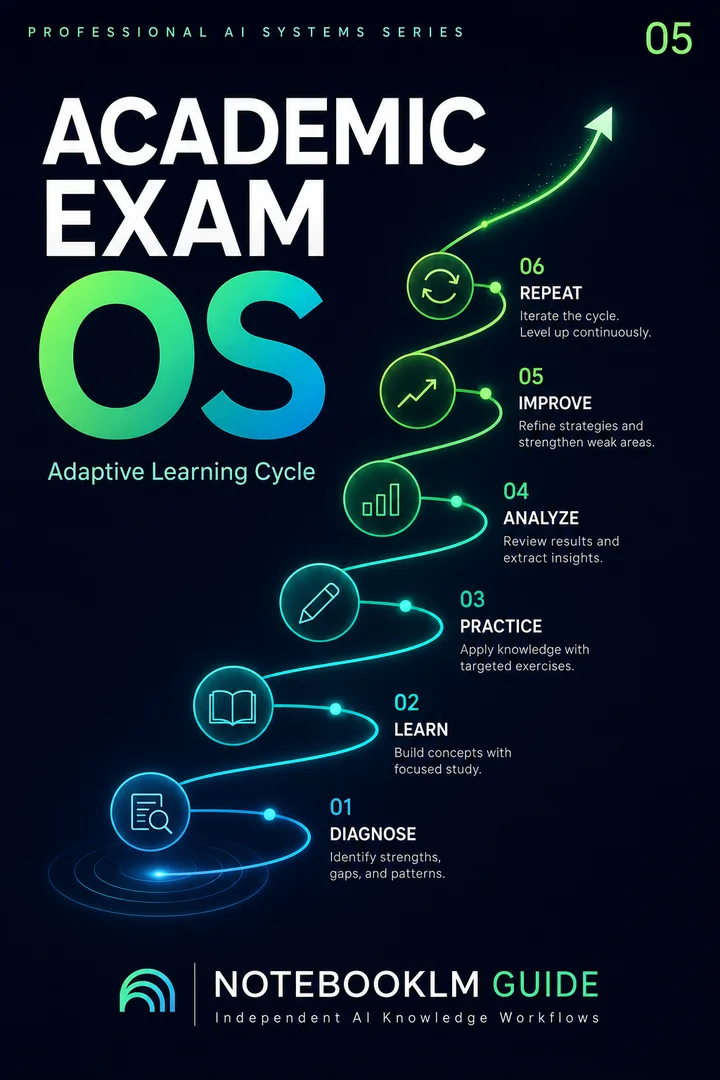
Academic Exam Prompt Package
A diagnostic study system for AP exams, GRE, SAT, and other academic tests.
- Reusable workflow architecture
- Source-grounded prompt patterns
- Implementation and review steps
- One-time purchase · permanent access
Claude Diagnoses Your FRQ Error Patterns
- Run a practice FRQ (College Board released FRQ or your prep book).
- Paste your FRQ response into Claude with this prompt: “Score my AP Psych FRQ using the College Board rubric. Identify: (1) which points I earned, (2) which points I missed, (3) whether my errors are theory identification failures, experiment design gaps, or predicted results mistakes. (4) Suggest a specific study action for each error.”
- If your score is below 4: Go back to Phase 1–3 for your weakest theories.
- If your score is 4+: Move to Phase 5–7 (MCQ drills, classic experiment analysis, final sprint).
The students scoring 5s don’t know more terms. They apply fewer theories more precisely.
College Board’s data shows AP Psych FRQs test application of 15 core theories, not recall of 700 definitions. The student who can take operant conditioning and design a complete experiment scores higher than the student who can define 50 terms but can’t apply any of them. The multi-agent workflow trains application, not memorization.
Copy this prompt into NotebookLM. Upload your AP Psych textbook chapters first.
Become the student who applies 15 theories precisely instead of memorizing 700 terms
- Every definition cites YOUR textbook. No invented experiments, no fabricated theories. NotebookLM only uses your sources.
- Theory application beats term memorization 3-to-1. Claude builds the theory → application chain that AP Psych FRQs reward.
- Experiment design templates earn consistent FRQ points. Claude scaffolds hypothesis → IV → DV → procedure → predicted results.
- Cross-unit connections stick with visual maps. Gemini creates diagrams showing how Unit 1 (bio bases) connects to Unit 7 (social psych) connects to Unit 8 (therapy).
Full 100-prompt library below ↓
Multi-agent AI vs. single AI vs. solo study for AP Psych
| Capability | Multi-Agent (4 Engines) | Single AI (ChatGPT) | Solo Study |
|---|---|---|---|
| Source-grounded definitions | ✓ NotebookLM cites YOUR textbook | ✗ Can hallucinate theories | ✓ Manual only |
| FRQ experiment scaffolding | ✓ Claude builds hypothesis-to-results | Partial — no rubric awareness | © Limited to prep course |
| Cross-unit theory maps | ✓ Gemini creates visual bridges | ✗ Text only | ✗ Hard to self-connect |
| Classic experiment analysis | ✓ NotebookLM retrieves with context | Partial — may confuse experiments | ✗ Manual lookup |
| MCQ scenario drills | ✓ ChatGPT generates unlimited scenarios | ✓ Good at this | © Limited to prep book |
| Cost | Free tool + $24.99 | $20/month | Free but 2–3× more hours |
Unlock 30 expert prompts for AP Psychology study.
Copy-paste prompts designed for NotebookLM’s source-grounded AI + multi-agent handoff instructions. Zero hallucination. Every definition cites your textbook.
AP & Academic Bundle — $24.99 one-time
Explore the Academic Exam Prompt Package Explore the Academic Exam Prompt PackageNot a prompt list. A theory-application system that trains the experiment design skill AP Psych rewards.
70 universal prompts (7 phases) + AP Psych-specific blocks for theory consolidation, experiment design templates, classic experiment analysis, and cross-unit connection mapping + multi-agent handoff instructions.
AP & Academic Bundle — one-time access
Explore the Academic Exam Prompt Package Explore the Academic Exam Prompt PackageFrequently asked questions
Can I use just NotebookLM without the other 3 AI tools?
What sources should I upload?
How long does it take?
Is NotebookLM free?
Do I really only need to know 15 theories?
Will this help with the MCAT psychology section?
More AP & exam prep
Hand-picked guides from the same topic cluster.
30 copy-ready AI prompts · one PDF
Thirty prompts you can paste today, sorted across research, content, Studio outputs and multi-AI work. Instant access. No credit card.