Score a 5 on APUSH — The AI History Tutor That Maps All 9 Periods While You Sleep
You’re re-reading AMSCO for the third time, but you still can’t connect Period 3 causation to Period 5 consequences under DBQ pressure. Meanwhile, the students scoring 5s are using AI to map cross-period themes, scaffold DBQ arguments with cited evidence, and generate LEQ thesis templates — all grounded in their own textbook with zero hallucinated history.
Instead of re-reading AMSCO passively, upload it into NotebookLM and turn it into a cited AP US History tutor. Prompt it to map all 9 periods, scaffold DBQ arguments, and generate LEQ evidence chains — every fact grounded in your sources, so no invented dates or events.
TL;DR — Stop re-reading AMSCO passively. Turn NotebookLM into a zero-hallucination AI history tutor that maps all 9 APUSH periods, scaffolds DBQ arguments, and generates LEQ evidence chains. 30 premium prompts. 1 free teaser prompt. Updated April 2026.
Updated June 2026. Maintained by a small team of AI super-users who teach multi-AI research and study workflows to researchers, students, and professionals — no affiliate relationships. About this guide →Changelog
Who becomes a higher-scoring APUSH student with this system?
For APUSH Students
4–8 weeks from exam day. You own AMSCO but can’t synthesize across 9 periods fast enough. These prompts build the cross-period bridges that earn complexity points on DBQs and LEQs.
Start at Phase 1 →For Score Improvers
Scored a 3 last time. The “Period Gap Analyzer” and “DBQ Argument Autopsy” diagnose whether your weakness is content, argumentation, or evidence usage.
Start at Phase 5 →For Last-Minute Studiers
Started late? The 80/20 filter identifies which periods and themes appear on 70% of exams. Focus there first. Audio Overviews turn commute time into period review.
Start at Phase 1 →Already scoring 4s?
The jump from 4 to 5 requires the “complexity point” — nuanced analysis, cross-period connections, or contradiction acknowledgment. Phase 6 targets exactly this.
See Phase 6 →The 7-phase APUSH mastery system
Why does source-grounded AI beat ChatGPT for APUSH?
You’ve probably tried asking ChatGPT to explain the causes of the Civil War. The answer is plausible but potentially inaccurate — ChatGPT may conflate historiographic interpretations, misattribute events to wrong periods, or state contested claims as fact. On the APUSH exam, one misplaced date or causation error in your DBQ can cost you the complexity point.
NotebookLM is different. Every response is grounded in citations to your uploaded AMSCO chapters and College Board framework. It cannot hallucinate historical events because it is constrained to your documents. When it says “the Second Great Awakening contributed to antebellum reform movements,” you can click the citation and verify the exact page.
The APUSH exam is fundamentally a historical argumentation test. The DBQ (25% of score) requires a defensible thesis, document analysis with sourcing (HIPP), outside evidence, and the elusive complexity point. The LEQ (15%) requires an argument with evidence across multiple periods. These aren’t knowledge tests — they’re reasoning tests. NotebookLM’s multi-source architecture builds exactly the cross-period evidence chains these essays demand.
The APUSH exam in 2026: what you need to know
Section I Part A: 55 stimulus-based MCQs in 55 minutes. Section I Part B: 3 Short Answer Questions in 40 minutes. Section II: 1 DBQ (60 minutes) + 1 LEQ (40 minutes).
Content spans 9 periods from 1491 to present, tested through 8 thematic lenses. The exam rewards argumentation and evidence, not memorization.
How the 7 phases work together
Build the workflow before buying a package
Get the AI Research Starter Kit: four workflows, 13 ready-to-use prompts, and a 7-day plan.
Phase 1 (Map) uploads your materials and maps coverage across all 9 periods against the College Board framework. Phase 2 (Themes) builds cross-period theme maps for all 8 APUSH themes with evidence chains. Phase 3 (DBQ) scaffolds document analysis with HIPP, thesis templates, and outside evidence banks. Phase 4 (LEQ/SAQ) constructs essay argument architectures and short answer precision templates. Phase 5 (MCQ) decodes stimulus-based question patterns and distractor types. Phase 6 (Score 5) targets the complexity point with nuance and contradiction strategies. Phase 7 (Sprint) executes the 72-hour lockdown protocol.
1 free teaser prompt — try it now
Copy this directly into NotebookLM. Upload your AMSCO chapters and College Board CED first.
Become the student who argues across periods instead of memorizing dates
- Every claim cites YOUR textbook. NotebookLM constrains responses to your uploaded AMSCO and College Board sources. Click any citation to verify the exact page. No invented events, no misattributed causation.
- Cross-period argumentation beats period-by-period memorization. These prompts build the thematic evidence chains that earn complexity points on DBQs and LEQs — the rubric element that separates 4s from 5s.
- Audio Overviews turn dead time into period review. Chronological summaries, theme overviews, and evidence banks — all listenable during commutes. One notebook, every format your schedule needs.
- Stimulus pattern recognition saves 10+ minutes per exam. Once you know that a data table stimulus almost always tests causation, you read faster and answer more accurately.
Full 100-prompt library below ↓
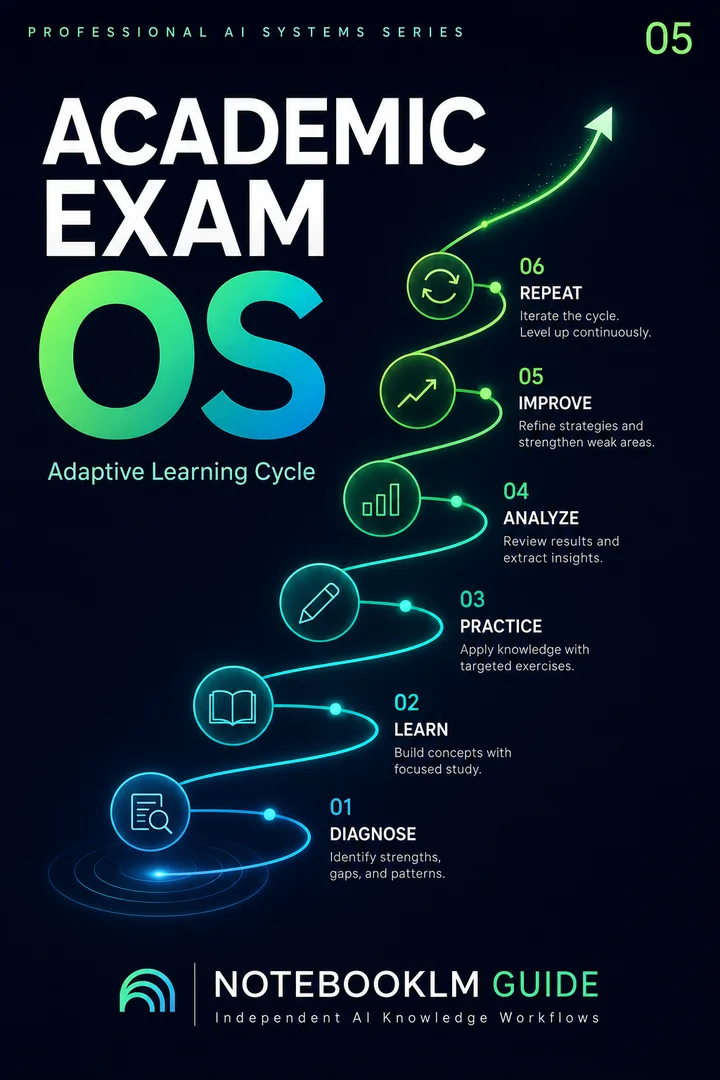
Unlock 30 expert prompts for AP US History study.
Copy-paste prompts designed for NotebookLM’s source-grounded AI. Zero hallucination. Every answer cites your materials.
AP & Academic Bundle — $24.99 one-time
Explore the Academic Exam Prompt Package Explore the Academic Exam Prompt PackageNot a prompt list. An argument-building system that maps all 9 APUSH periods into NotebookLM’s source-grounded engine.
70 universal prompts (7 phases) + APUSH-specific blocks for DBQ argument scaffolding, LEQ thesis architecture, cross-period theme mapping, and stimulus MCQ pattern decoding.
AP & Academic Bundle — one-time access
Explore the Academic Exam Prompt Package Explore the Academic Exam Prompt PackageNotebookLM vs. ChatGPT vs. solo study for APUSH
| Capability | NotebookLM + These Prompts | ChatGPT / Generic AI | Solo Study |
|---|---|---|---|
| Source-grounded (zero hallucination) | ✓ Inline citations to your AMSCO | ✗ Can fabricate historical claims | ✓ Manual only |
| Cross-period theme mapping | ✓ Automated from your sources | Partial — generic, not your textbook | ✗ Very slow manually |
| DBQ argument scaffolding | ✓ Rubric-mapped thesis + evidence | Partial — doesn’t know AP rubric | ✗ Requires teacher feedback |
| Audio review (commute-friendly) | ✓ Audio Overview period reviews | ✗ Not available | ✗ Not available |
| College Board framework alignment | ✓ Automated content mapping | ✗ Doesn’t know your sources | Possible but 10+ hours |
| Cost | Free tool + $24.99 bundle | $20/month subscription | Free but 2–3× more hours |
Frequently asked questions
Can NotebookLM help me score a 5 on APUSH?
What sources should I upload?
How is this different from Heimler’s History or other YouTube reviews?
How many hours does the full system take?
Does this work for AP World or AP Euro too?
Can NotebookLM generate slide decks for APUSH review?
30 copy-ready AI prompts · one PDF
Thirty prompts you can paste today, sorted across research, content, Studio outputs and multi-AI work. Instant access. No credit card.